Calcularis product overview
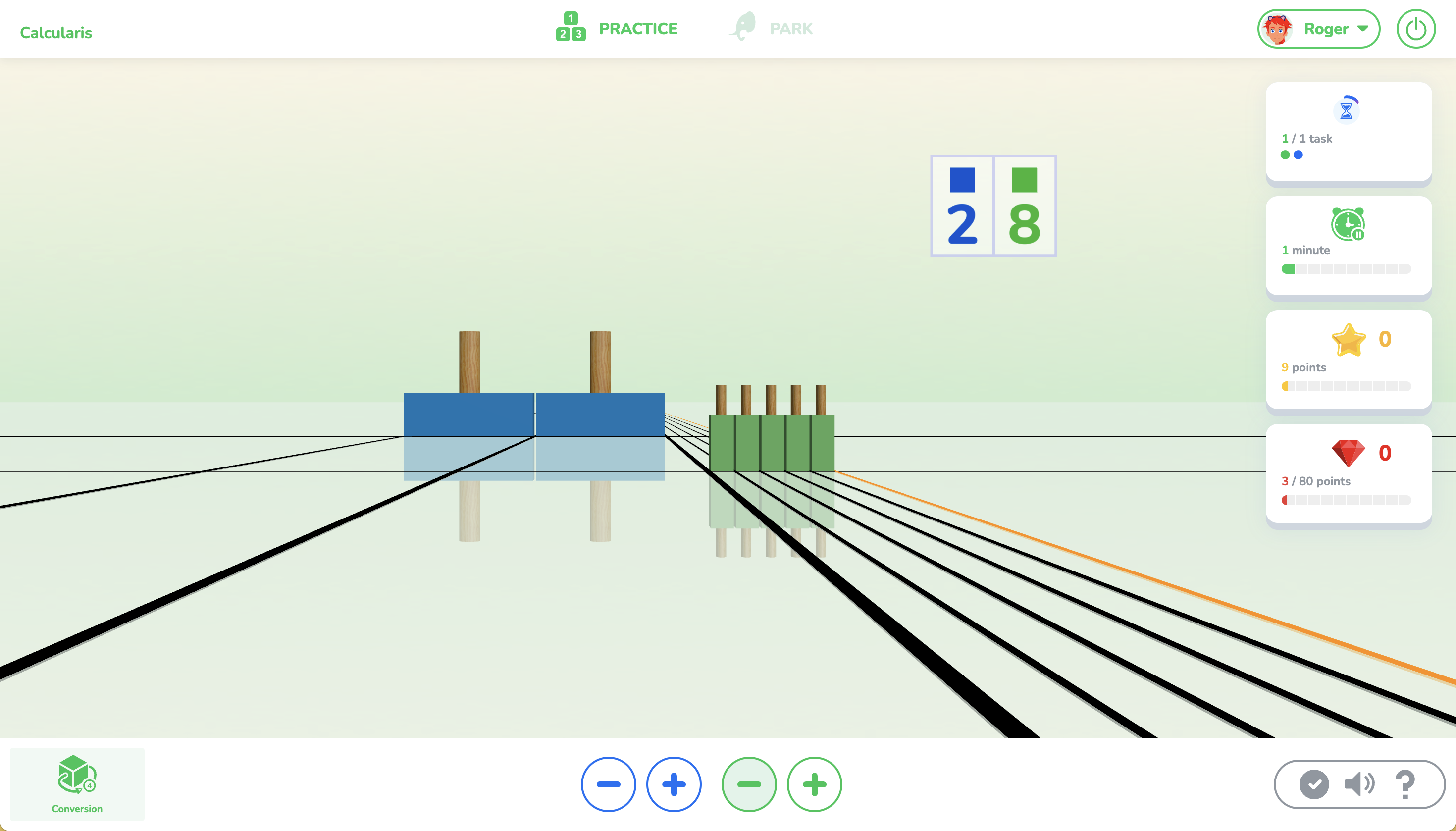
Calcularis is an AI-powered learning program designed to help children overcome math challenges through a personalized, research-backed approach. Calcularis applies neuropsychological principles to assist children with fundamental math concepts. The program supports a range of learners, including those with dyscalculia or difficulties in math, by adapting to each child's individual learning pace and needs.
Key Features
-
Neuropsychological and Technological Integration
Calcularis enhances brain function by promoting spatial number representation, enabling children to understand and manipulate numbers through multisensory techniques. -
Progressive Learning Paths
The program builds a strong math foundation by gradually introducing concepts, allowing children to develop math skills step-by-step. -
Tailored Learning Experience
Calcularis identifies each child’s specific challenges and adjusts the difficulty level, ensuring a personalized approach that maximizes progress. -
Automatic Progress Analysis
Parents and teachers can track students' progress through automated reports, offering insights into strengths and areas for improvement. -
Proven Methodology
Calcularis uses techniques like spatial number representation games and interactive exercises to reinforce math skills, allowing children to learn independently.
Impact and Statistics
- Over 100,000 children have benefited from Calcularis.
- Designed for 20 minutes, 3 times a week, the program has shown significant improvement in math skills.
- Reduction in math errors by 43% for students using the program.
- 1,500+ schools have incorporated Calcularis into their curriculum.
Calcularis Free Trial and Pricing
- 3-Day Free Trial: New users can explore Calcularis before committing.
- Subscription Plans:
- Annual Plan: $240 per year
- 6-Month Plan: $25 per month or $150 every 6 months
- 3-Month Plan: $33 per month or $99 every 3 months
All plans provide access to the full range of Calcularis features, including tailored, AI-driven learning and progress tracking.
Are there any discounts for purchasing both Calcularis and Grafari together?
Yes, there is a 50% discount available when purchasing both Calcularis and Grafari. To apply this combo discount, please reach out to our support team, and they will assist you with setting it up. This offer enables families to support their children’s learning in both math and spelling at a reduced rate.
Calcularis Supported Languages:
- English (EN)
- German (DE) (Germany and Switzerland)
- Spanish (ESP)
- French (FR)
- Italian (IT)
- Dutch (NL)
- Swedish (SWE)
- Portuguese (PT)
- Ukrainian (UKR)
- Norwegian (NO)
- Bulgarian (BG)
How does Calcularis help with dyscalculia?
Calcularis is specifically designed to support children with dyscalculia by offering a personalized, adaptive approach to learning mathematics. Dyscalculia is a learning difficulty that affects a child’s ability to understand numbers and perform basic arithmetic. Through years of research and the integration of neuropsychological principles, Calcularis addresses these challenges with targeted features proven to improve math skills and help learners gain confidence in their abilities.
1. Adaptive, Personalized Learning
Calcularis identifies each child’s specific strengths and weaknesses in math and adapts the difficulty level accordingly. This tailored approach ensures that children are neither overwhelmed nor under-challenged, helping them stay engaged and build foundational skills at their own pace. By analyzing error patterns, Calcularis customizes lessons to address problem areas, which is especially beneficial for children with dyscalculia, who often struggle with traditional one-size-fits-all instruction.
2. Multisensory Learning Techniques
For children with dyscalculia, learning through multiple senses—such as sight, sound, and touch—can significantly enhance understanding and retention. Calcularis employs multisensory methods, using colors, shapes, and interactive exercises that encourage students to visualize math concepts. This approach helps children better grasp abstract ideas like quantity, space, and number relationships, which are typically difficult for learners with dyscalculia.
3. Incremental Skill Development
Calcularis breaks down math concepts into small, manageable steps, allowing children to gradually build their math skills. Starting with basic number sense, learners progress through increasingly complex tasks in addition, subtraction, multiplication, and division. This structured and incremental method is highly effective for children with dyscalculia, as it allows them to solidify each concept before moving to the next, reducing frustration and reinforcing understanding.
4. Immediate Feedback and Self-Correction
The program provides instant feedback on each answer, guiding students to self-correct and learn from their mistakes. This process of immediate feedback helps children with dyscalculia recognize patterns and understand their errors, supporting long-term retention and making it easier for them to apply their learning independently.
5. Progress Monitoring for Motivation and Confidence
Calcularis tracks each learner’s progress and offers visual reports, allowing parents, teachers, and students themselves to see improvements over time. For children with dyscalculia, measurable progress can be a powerful motivator, as it builds confidence and reinforces a positive learning experience. Knowing they are making tangible strides helps these students stay motivated and feel more capable in their math abilities.
6. Proven Results and Lasting Impact
Studies have shown that Calcularis has a lasting positive impact on children’s math skills, particularly for those with dyscalculia. For instance, research has demonstrated substantial improvements in subtraction and addition skills, with percentile ranks significantly increasing over just a few weeks of training. These results indicate that Calcularis not only improves immediate math performance but also builds skills that remain stable over time, giving children a stronger foundation for future learning.
In summary, Calcularis is an effective tool for helping children with dyscalculia overcome math challenges through personalized, adaptive learning, multisensory engagement, and structured skill development. This supportive approach helps learners build confidence, independence, and lasting math proficiency, making a meaningful difference in their educational journey.
Does Calcularis help kids with ADHD?
Supporting children with ADHD involves creating structure, using positive reinforcement, and incorporating movement and multisensory learning techniques. Establishing a consistent routine with clear expectations helps reduce anxiety and improve focus, while praise and small rewards encourage progress and boost confidence. Regular movement breaks and interactive, hands-on activities keep them engaged and allow them to process information more effectively. A quiet, organized study space with limited distractions, along with healthy habits like balanced nutrition, exercise, and adequate sleep, can further enhance their focus and emotional regulation, making daily tasks more manageable.
What platforms support Calcularis?
Currently, Calcularis is available exclusively for desktop platforms. This ensures that students and educators can access the full range of features and tools designed to support structured spelling and writing instruction. By focusing on a desktop format, Calcularis can provide a more robust learning experience that integrates seamlessly with classroom technology and home study setups.
Are there any discounts for siblings?
Yes, there is a 50% discount of Grafari available for siblings, making it easier for families to support multiple children using Calcularis’s learning platform. To apply this discount, simply write to our support team, and they will assist you with setting it up.